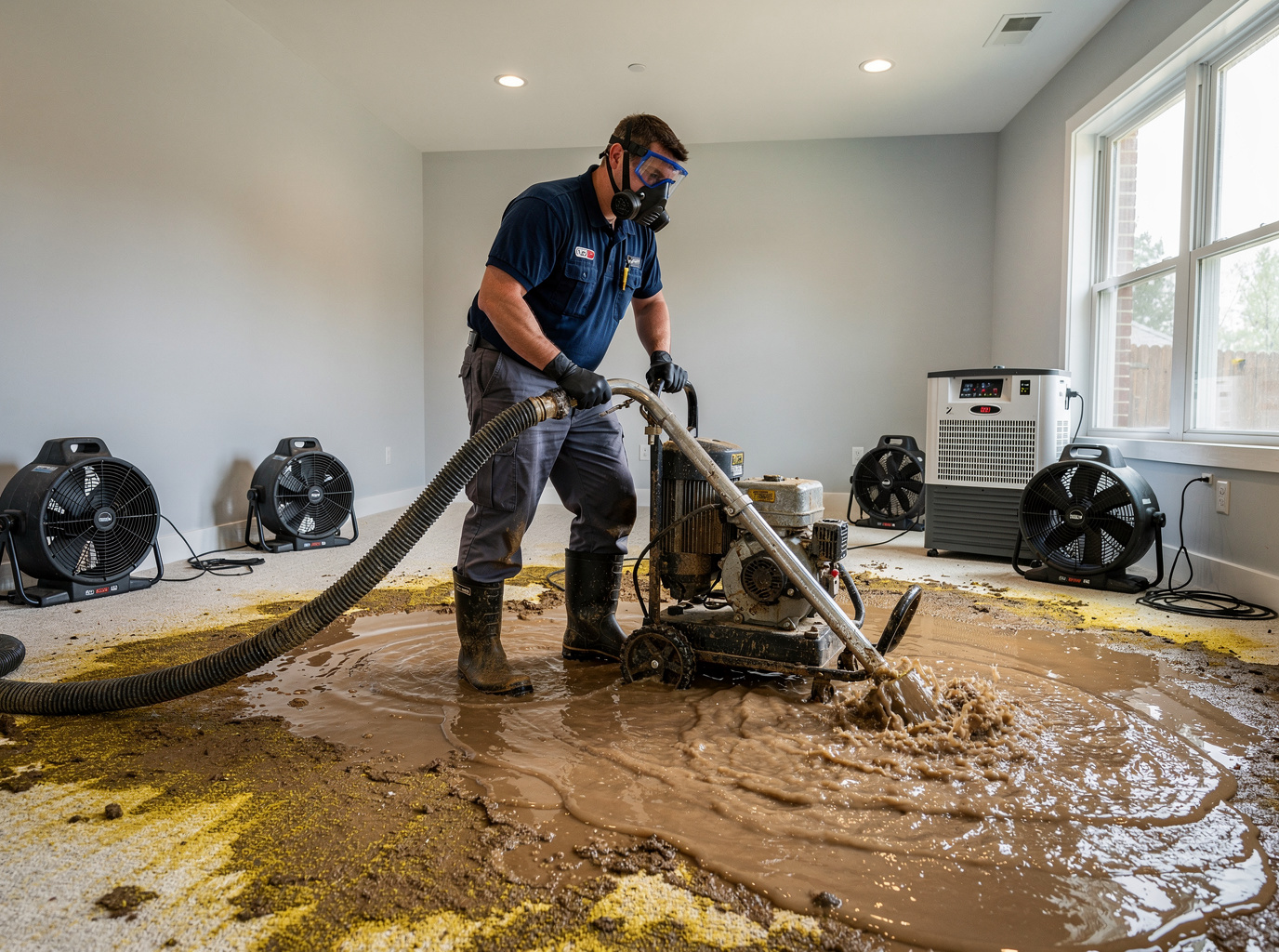
Roswell's older housing stock in areas like Berrendo and East Grand Plains often features crawl spaces and slab foundations that trap sewage water after backups, especially during the occasional heavy rains that hit the semi-arid climate. Extraction must account for clay-heavy soils that slow natural drainage and force technicians to pull moisture from underfloor voids before it migrates into wall cavities. Standard shop vacs fail here; industrial pumps rated for Category 3 water are required to move the volume without aerosolizing contaminants into living spaces.
Hot summer temperatures in Chaves County accelerate bacterial growth in standing sewage while mild winters allow hidden moisture to linger undetected in North Park basements. Drying protocols include placing dehumidifiers calibrated for low-humidity air alongside air movers aimed at subfloor joists, because skipping this step leads to recurring mold in homes built before modern vapor barriers became common. Technicians also check for compromised cast-iron or clay sewer lines common in Downtown Roswell properties, since extraction alone does not fix the source.
Nearby cities like Artesia and Carlsbad share similar soil and climate challenges, but Roswell jobs frequently involve older Walker Air Force Base-era housing with limited access points that complicate equipment placement. Edge cases include sewage that has wicked into insulation behind drywall in East Grand Plains ranches, requiring selective removal rather than blanket demolition. All work follows New Mexico plumbing code requirements for proper disposal and documentation of contaminated materials.
Technician insight
In Roswell, the thing that catches most people out with Sewage-Contaminated Water Extraction & Drying is assuming the semi-arid air will finish the job after pumping. Older homes in Downtown Roswell and Berrendo often have poor ventilation and clay soil that keeps moisture trapped under slabs for weeks, leading to hidden rot if drying is not forced with equipment.
Sewage Backup in East Grand Plains Crawl Space
Heavy rain overwhelmed an aging sewer line on a property near East Grand Plains, sending Category 3 water under the home. Extraction removed the standing sewage while mapping showed saturation in floor joists. Targeted drying prevented mold growth in the older framing.
Sewage-Contaminated Water Extraction & Drying Services We Offer
✓Crawl Space Sewage Extraction
Removes standing and trapped sewage from crawl spaces common in Berrendo and East Grand Plains homes where flat terrain allows water to pool under floor joists.
✓Subfloor Moisture Mapping and Drying
Uses moisture meters to locate hidden saturation in older Downtown Roswell slabs and directs targeted drying to prevent long-term structural damage.
✓Basement Water Extraction
Handles sewage backups in North Park basements by pumping Category 3 water and applying industrial drying to concrete and masonry surfaces.
✓Post-Backup Structural Drying
Dries wall cavities and framing in semi-arid conditions after sewage intrusion, focusing on homes near Spring River Park where seasonal moisture swings complicate recovery.
✓Carpet and Pad Removal After Sewage
Extracts contaminated water from flooring then removes and disposes of saturated carpet and pad in Chaves County residences to stop odor and bacterial spread.
Sewage-Contaminated Water Extraction & Drying Cost in Roswell, NM
| Service | Typical Range | What Affects It |
|---|---|---|
| Crawl Space Extraction | $650–$1,400 | Higher when access is limited in older Berrendo homes |
| Basement Drying Package | $900–$2,100 | Includes equipment for 3–5 days in North Park properties |
| Subfloor Moisture Removal | $500–$1,100 | Depends on square footage and slab condition |
| Flooring Extraction and Disposal | $350–$750 | Varies with carpet versus hardwood in East Grand Plains homes |
Ranges are typical for Roswell, NM and confirmed with an exact written quote before any work starts.
How it works
- 1
On-Site Assessment
Technicians inspect the property in neighborhoods such as Downtown Roswell or East Grand Plains to determine water volume, contamination level, and affected materials.
- 2
Contaminated Water Extraction
Industrial pumps remove standing sewage while containing aerosols, paying special attention to crawl spaces typical in Roswell's older housing stock.
- 3
Targeted Drying Setup
Air movers and dehumidifiers are positioned to pull moisture from subfloors and walls, adjusted for the region's low ambient humidity.
- 4
Final Moisture Verification
Readings confirm dryness before any reconstruction, with documentation provided for Chaves County properties.
Pricing
Upfront quotes provided after on-site assessment; costs vary by extent of contamination and property size.