
2026-09-19 · Frank Torres
Sewage Backup vs Ordinary Drain Clog: What Is the Difference?
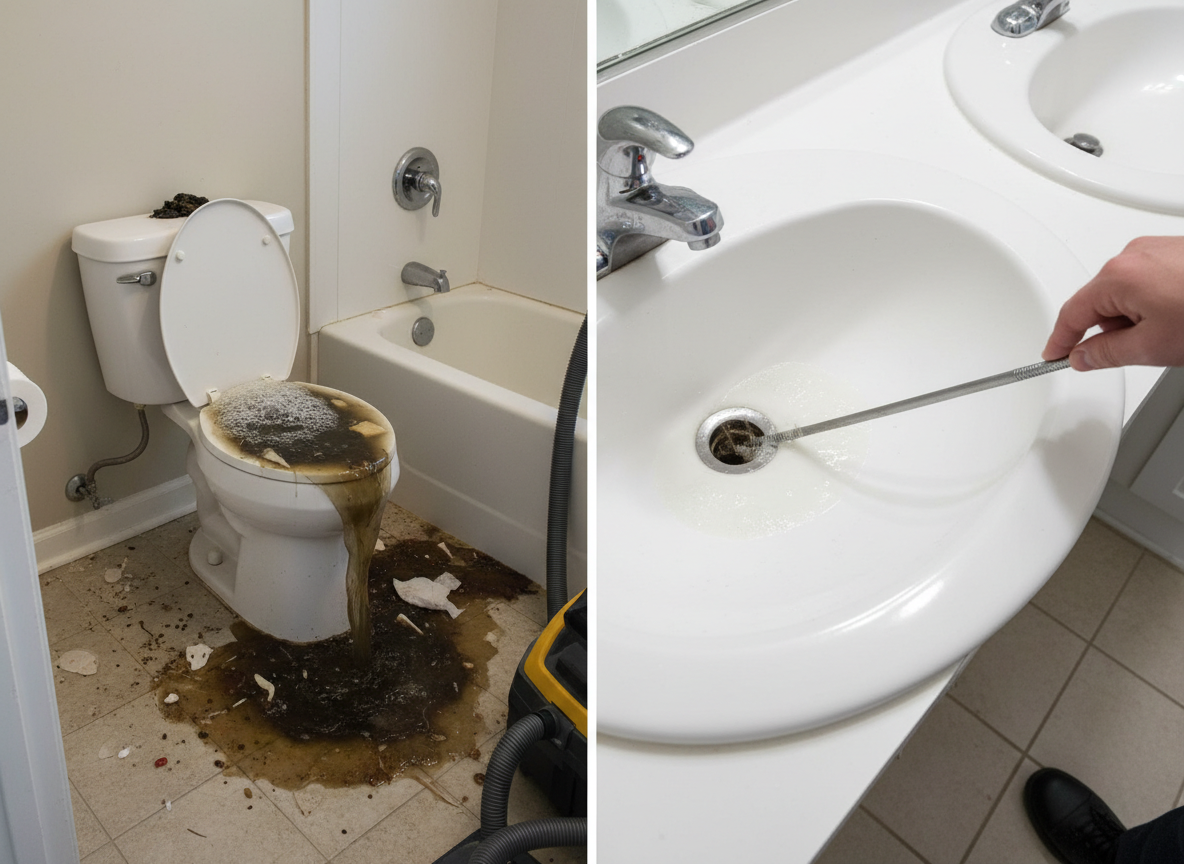
A sewage backup in Roswell brings black water from the municipal sewer into multiple fixtures, while an ordinary drain clog remains limited to one line with clear water or minor debris and rarely crosses into other drains.
Signs That Point to Sewage Backup
Sewage backups often start with multiple fixtures backing up at once, such as toilets, showers, and floor drains in the same property. The water carries a strong odor and visible solids, unlike the slow drainage from a single clogged sink or tub. In neighborhoods like Downtown Roswell Historic District, older cast-iron pipes from the mid-20th century crack more easily under root pressure or shifting soil, allowing main-line waste to enter homes. Residents in North Park or Berrendo notice the difference when water rises in a bathtub after flushing a distant toilet. These patterns rarely occur with an isolated clog caused by hair or grease in one P-trap. Checking whether the issue affects only one fixture or spreads across the house helps determine the source before water damages flooring or drywall.
How Ordinary Drain Clogs Develop Differently
Ordinary clogs form from everyday buildup in branch lines and usually clear with a plunger or basic snake. They produce slow drainage but no foul smell or discoloration beyond gray water. In contrast, a sewage backup stems from blockages or failures farther down the main sewer, often after heavy rain when stormwater overwhelms Chaves County lines. Homes near East Grand Plains or along routes to Artesia and Carlsbad sit on flatter terrain where sediment settles and narrows pipes over decades. A clog in a 40-year-old kitchen line might stop only that sink, yet a main-line obstruction sends waste upward through every low point. The distinction matters because treating a main-line issue as a simple clog allows contaminated water to remain and affect indoor air quality.
Local Climate and Soil Effects on Both Issues
Roswell's semi-arid climate brings hot summers that dry soil and cause pipe joints to separate, then mild winters with occasional freezes that expand trapped water. These cycles stress older lines in Berrendo and South Highlands more than newer subdivisions. When monsoon rains arrive, the ground saturates quickly on the flat Chaves County terrain, pushing sewage upward through floor drains rather than letting it drain away. An ordinary clog rarely reacts to weather, but a compromised main line shows clear seasonal patterns. Properties in areas like the former Walker Air Force Base vicinity often retain original plumbing that has settled unevenly, increasing the chance that a backup appears after the first heavy storm of the season.
Practical Steps When the Problem Appears
Stop using all water sources immediately and note which fixtures are affected to distinguish the two problems. Ventilate affected rooms while avoiding direct contact with the water. For confirmed sewage, professional extraction and drying become necessary to prevent mold in wall cavities common in Roswell's single-story brick homes. Readers facing recurring backups can review Why Is Sewage Coming Up Through a Floor Drain? for additional local context. When the issue involves multiple fixtures, sewage coming up through floor drain cleanup addresses the main-line source directly. Homeowners who want guidance on first actions should read What Should You Do Immediately After a Sewage Backup? before attempting any DIY fixes that could spread contamination.